Tuesday, June 21, 2016

Panaversary

Panaversary
June 17, 2016

One year has officially passed within the boarders of the isthmus between the Americas. In many ways, I still span between my two lives, one being my family and friends back in the United states and the other, my Panamanian family of volunteers, my host family, community members and other Panamanians. 

I am in Boquete, the comfortable mountain town which provides the internet, power, and amenities that I need to finish the design of Cerro Pita's aqueduct. I extract information from my dirt caked journal, and input  it into Excel and struggle with incompatible operating systems. The design is unfolding, and weeks of studies with the gente are producing valuable information.

As I reflect on my reflection of the last year, I notice myself wanting to use cliches you often hear from PCV's or Returned PCV's: "the Peace Corps will change you", "high highs, and low lows", "the most valuable and cherished memories are within your community", "two years is a long time, but it will be have passed before you know it".

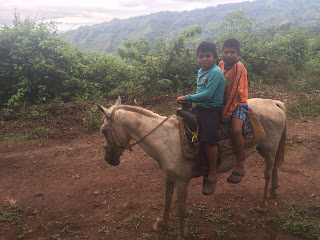
The previous five years I had spent with young students with bright eyes looking towards an comfortable future. The world was a microcosm of privilege and health and support. That has changed. Now I feel like an uncle to a large family,  the grandson of aging indigenous grandparents, and a co-worker with various idealistic old men who are trying to navigate a world full of unfamiliar influences. My house is filled with chalk drawings made by giggling children and visitors are often the age of my parents or older. I interact with the many stages of life on a daily basis. I see the youthful blissfulness in the kids who flop on my wood floor, the tension in the eyes of young men who realize the uphill battle to fit unto the outside world, the suspicion in the expressions of adults who are being told some of their habits are causing illness, and the surprise in the smile of an ancient lady who speaks ngabere to a gringo for presumably the first time. What they see in me are unusual blue eyes, likely sparkling with support and privilage, but also pupils dilating to absorb a wider picture of humanity. Wrinkles form around my eyes, some from the endless smiles and laughter inspired by the kids and jubilant conversations by firelight, and others from the intensity of the Panamanian sun, that brightens and warms the world but also finds a way to illuminate the shadows. 

An anaversary is welcome, and I'm happy to have passed a year in Panama, but look forward to the unpredictable memories to be made in the year to come. 

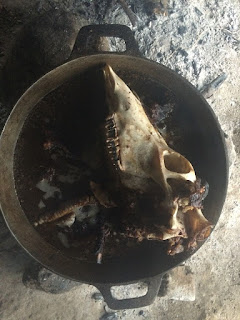
Recent happenings include: learning to dress a cow (very hands on), salting and smoking beef, helping develop a climbing area in the comarca, and finishing up with the design of the aqueduct 

...

With my speedy internet I included a few photos from the last few months!

 Tita, la gatita, with her cat door cut with a leatherman into the wooden board. 

RnB

Work day. Sitting around, talking about the work to be done

Ricardo- the prez and the first lady Elena

 Pita's premier swimming hole

 Dried badger?

 Abran, smiles as long as he is awake... Maybe longer

 Fishin'

 One year old already running errands 

Tita sleeps with an invisible pillow

Onorio jamming out 

 Meat for sale

 The killing of a cow is a community event. Free range, grass-fed beef, cheaper than the Kroger stuff in Safeway

Smoking corned beef 

 Fancy smoke bed
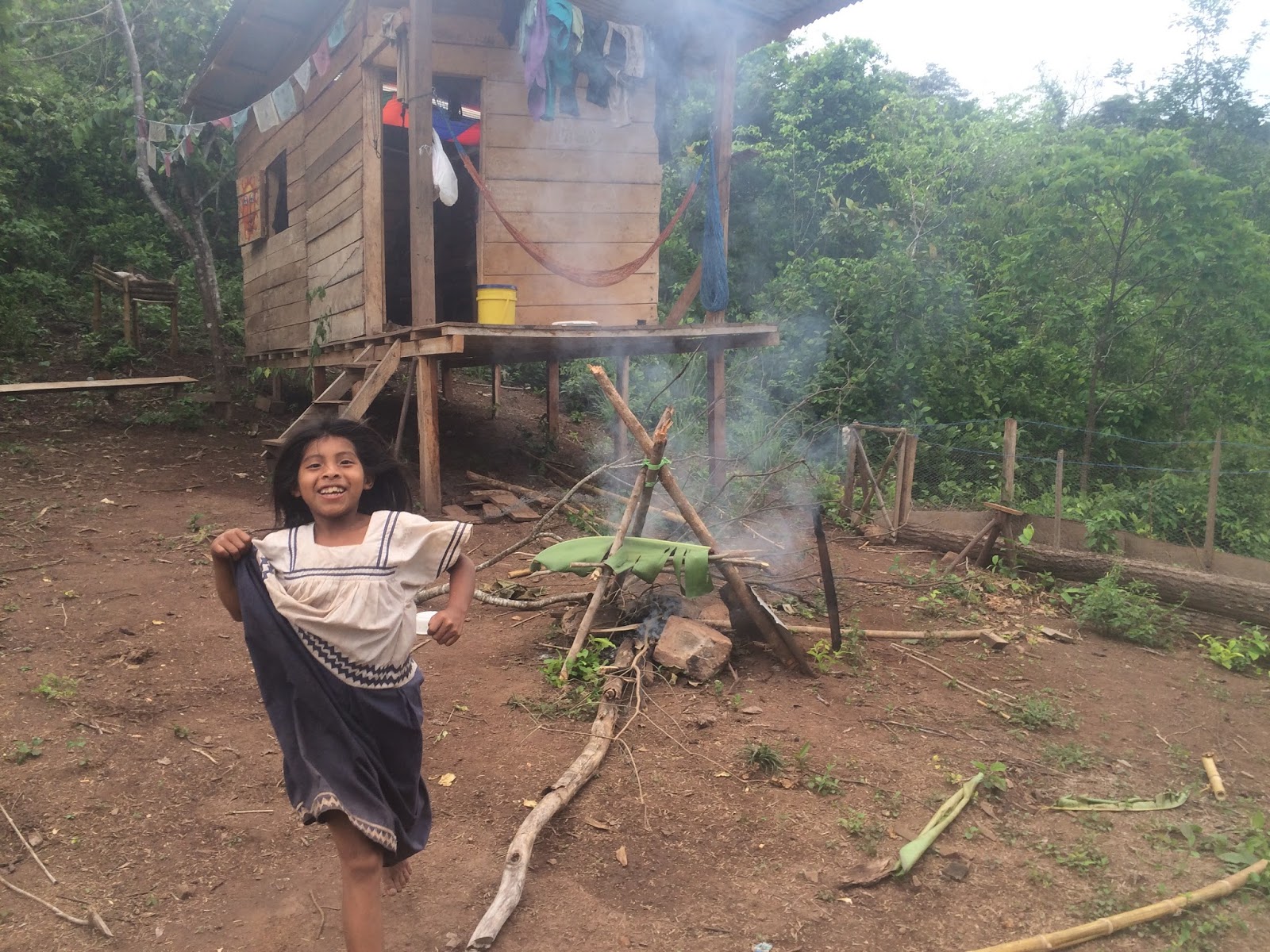
Edjo

 Ricardo looking fly at the PC leadership workshop

 Comarca Volunteers

Map of Pita

Dinner

Lucy, a new addition to the family

Chaco, Abuela, Chich, and floating veggies

House of children

No need to wait until 16 to drive the family car

Bone broth soup

Fishin'

Waterfalls on our arduous hike to Pita

Comarca Capital in the back!
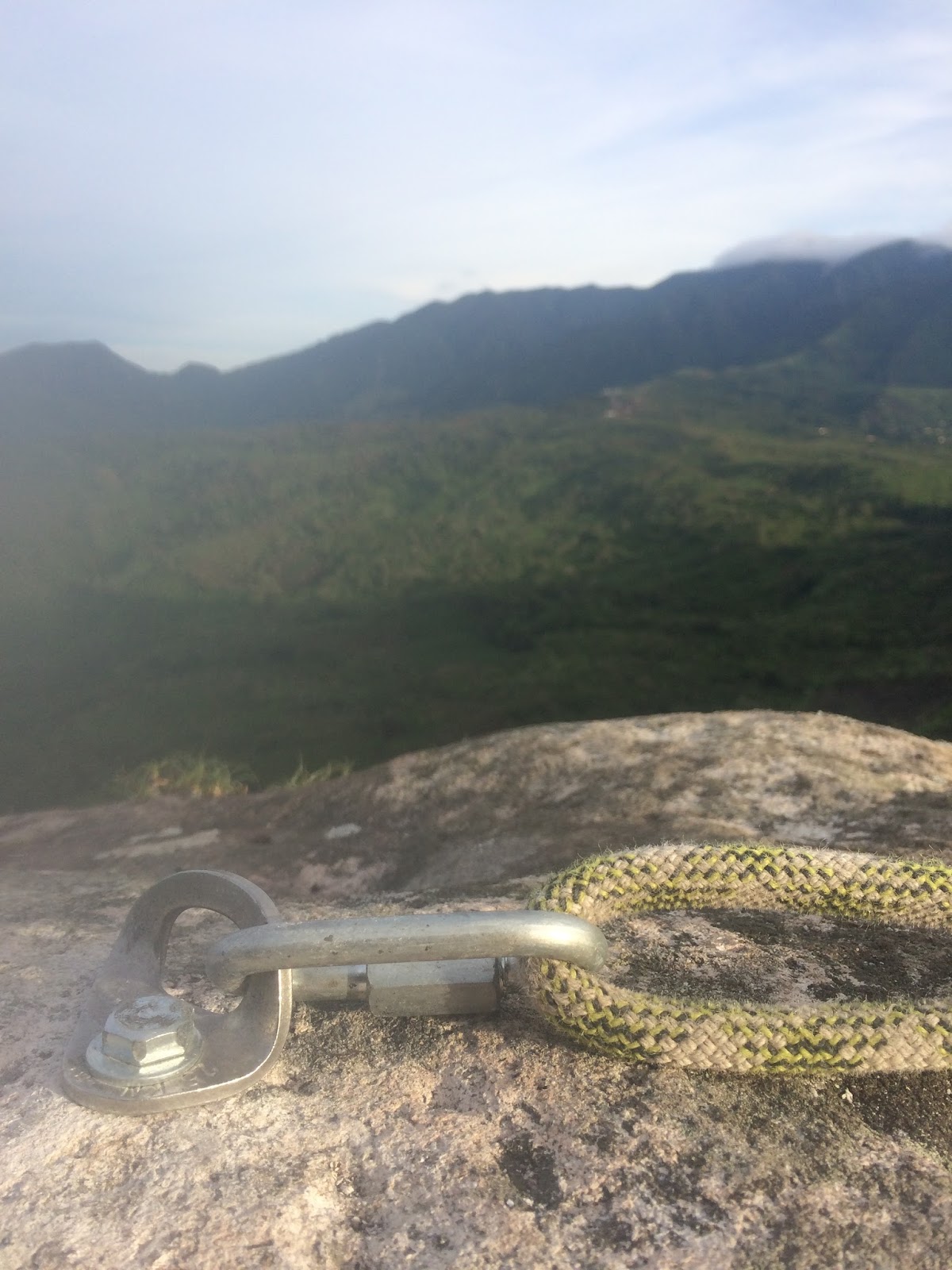
First bolt in the Comarca!

Climbing potential


Thursday, May 19, 2016

To the other side

To the Other Side


Even the gente of Cerro Pita gave me a look of astonishment when I told them what we planned to do. "Caminar a Bocas?" They'd say, " eso, si es lejos".  Why not take a bus, they'd ask me. What about the lions and the cold and getting lost. Not even the clouds pass over the cordillera. Its different over there, they’d say, they talk differently, dress differently, eat differently. To them, there did not seem to be a reason.  We had a plan, I'd inform them - a guide who knows the way. We would pass through the heart of the comarca on a path that has surely been used for hundreds of years by Ngabes. Plus we are adventurous youth and some curiosity in our blood drives us to conocer places, to see new things and beautiful landscapes. They wished me well, and when I returned, they devoured the pictures and drenched me in questions. They too were interested in how the "other side" lived, and of course the machachos were  inquisitive about the meris  (ladies) of Bocas.


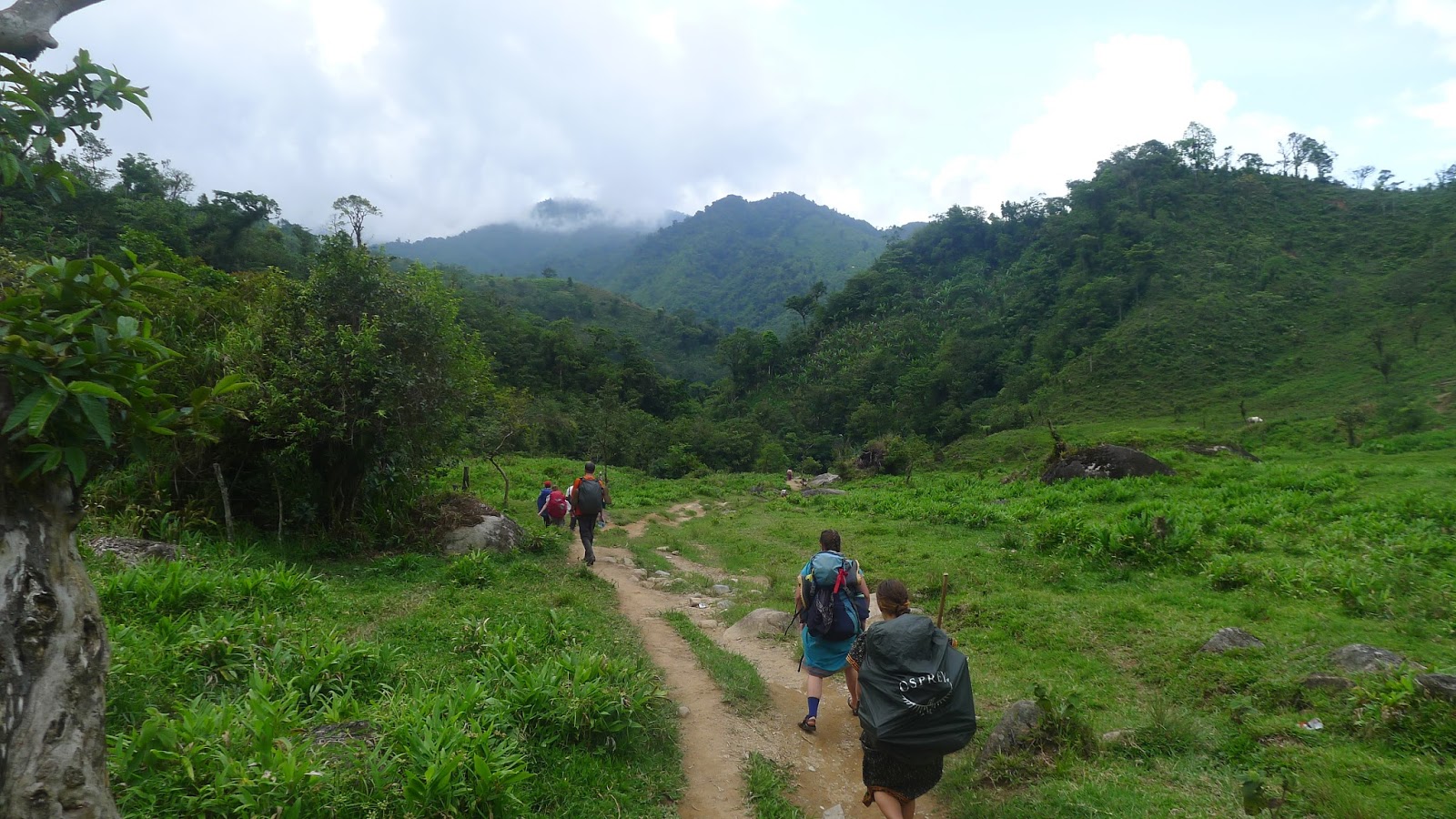
We were a group of seven, all PC volunteers working with Ngabe communities. Our sandals started off caked in salt from the pacific and five days later our boots were cleaned of Bocas mud by the clear waters of the Caribbean. For two and a half days we climbed the road into the cordillera, buses and trucks rolled by us heading to the same destination. At one point we heard someone say, they must not have the cash for the bus ride - the only plausible explanation for why we would be walking on the road. Our first night was spent in a beach cabana in Las Lajas. The second, we slept in PCV Carl's house with stomachs full from pasta and white bean sauce cooked by Carl and his Dad. The third night we got out our sleeping bags and slept in a concrete house in the hills outside of Chami. From Chami, our guide, Maximo, accompanied us to the end of the road, were we looked down on the hills and valleys of the pacific side of the Comarca, then turned and began the decent to the Caribbean. A cold rain fell on us, and we took refuge in the house of some man on the side of the road, who lived with his goat in the cloud forest. The road ended at the high point, nearly 6000 feet, and from there we continuned down the valley of the Cricamola, starting at the great rivers headwaters and finally ending where it was far to wide to cross without a boat or a massive bridge.


We carried bags packed with ultra light back packing gear, and technical clothes and medication for infections and mattresses to soften our night sleep. Maximom, our guide, carried a book bag, with a change of clothes, a black plastic bag to sleep on, and an empty water bottle.


After the road ended, modern touches fell away in-tow. Panca roofs became more common than corrugated steel roofs. People stopped and stared more readily at the group of Giants passing through. A man at one point stopped me, and asked if we were the folks they called gringos. The river grew quickly, and to my surprise, the preferred method for crossing to the other side, was with cables that spanned the river. Zip-lines, created out of necessity, appeared regularly down the river, until it became too wide even for zip-lines. We passed through small communities, with a school as each towns center. Latino teachers hike into each school, for a few weeks at a time. The farthest hike in Panama for a teacher is 10 hours, to a town called Red Rock, which we would pass through the following day. In between towns, would be family houses, and groups of children, women, men, grandparents gathered outside, watching us pass through. We played soccer with a group of kids in a town called Acha, and finally arrived in Tolote, where we slept. Maximo found a family to cook for us, and we slept in a room in the school. We bathed in the Cricamola, a roaring river, just 10 km from its headwaters. A few of us went to buy food at one of the tiendas. What we found, was not the poorly stocked tiendas we were all used to, but rather a mini-supermarket, nearly 4 hours from the road. Everything was brought in by foot, as horses would slip on the slick trail. We bought onions, garlic, rice and beans, which we ate for dinner and then breakfast and lunch the following day. The town was a made up primarily of cirular panca houses, with tall cones shaped roofs . The inside of the houses felt spacious, with board beds spanning the perimeter, leaving a large open space in the middle. The people were kind and a father spoke to us while he held his two sons in his arms while we ate breakfast in his house. The next day we continued our decent, up and down hills and over log bridges. We knocked fruit off trees and bought candy at tiendas, and found a tienda which had a solar powered freezer, about 8 hours from the road, also brought in on the shoulders of some incredible men or women.


The following two days we would climb over hills, or walk along the rivers edge. The land did not have the scars of slash and burn agriculture that covers the pacific side of the comarca. Mro (Food) means rice on the pacific side, but means bananas on the Caribbean side, and thus there were lots of banana trees, but they seemed to blend in with the jungle. When the river became too wide for log bridges, we crossed in dugout canoe. We walked by a house that used carved out bamboo as tubes to bring water to the house - an organic aqueduct of sorts. We witnessed a helicopter land in a community to fly out a sick teacher- creating an eerie resemblance to Vietnam. The last few days, many of us were suffering from blisters or bruises, but conversation with the gente or the sheer beautify of the place kept us going until we arrived at Kankantu.


Kankantu is a city in the jungle. It has cafes, restaurants, a university, and two story houses. We feasted on egg and cheese sandwiches, and bought bags made from traditional fabrics. A man opened up his house to us, which had running water, a flush toilet and various closed off rooms. It was a fascinating end to the trip, going from the circular traditional houses, to the european style painted boarded house, in the same comarca. Modernity creeps its way up the Cricamola valley, which holds the most well preserved example of indigenous life I have ever seen. Kankantu was impressive and comfortable, but there was a feeling of magic that was left in the valley, a sort of symbioses between valley and inhabitant that was hidden behind the tall houses and zinc roofs.

We left Kankantu by boat, and then returned to the pacific side by bus. In David we feasted on pizza and icecream. My sore feat then carried me back to Cerro Pita, where my squash seeds had sprouted, and the tomatoes and peppers had doubled in size, enriched by he sweet, sweet rain that had fallen in my absence.

..photos to come, when I have better internet!