Thursday, May 19, 2016

To the other side

To the Other Side


Even the gente of Cerro Pita gave me a look of astonishment when I told them what we planned to do. "Caminar a Bocas?" They'd say, " eso, si es lejos".  Why not take a bus, they'd ask me. What about the lions and the cold and getting lost. Not even the clouds pass over the cordillera. Its different over there, they’d say, they talk differently, dress differently, eat differently. To them, there did not seem to be a reason.  We had a plan, I'd inform them - a guide who knows the way. We would pass through the heart of the comarca on a path that has surely been used for hundreds of years by Ngabes. Plus we are adventurous youth and some curiosity in our blood drives us to conocer places, to see new things and beautiful landscapes. They wished me well, and when I returned, they devoured the pictures and drenched me in questions. They too were interested in how the "other side" lived, and of course the machachos were  inquisitive about the meris  (ladies) of Bocas.


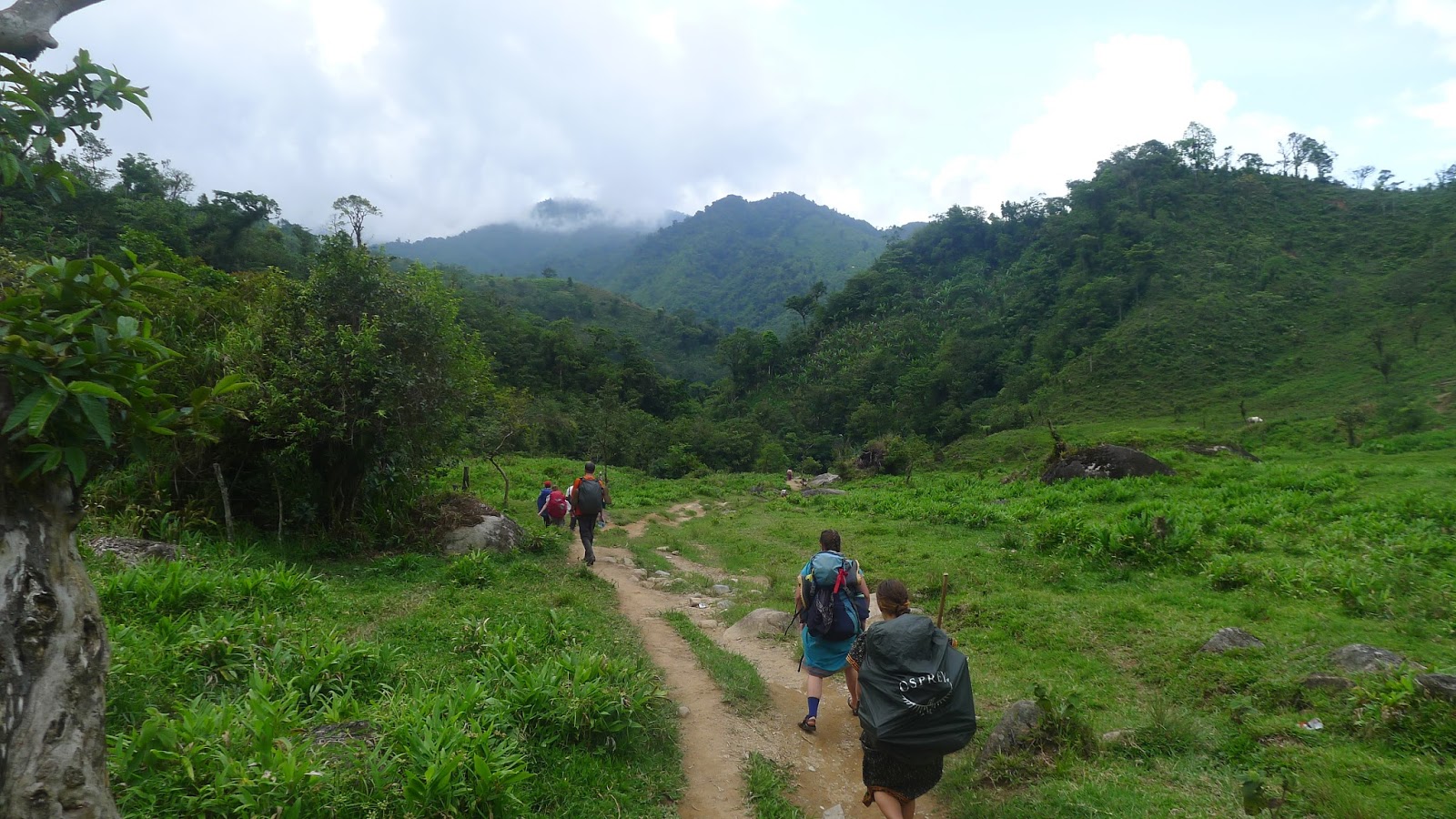
We were a group of seven, all PC volunteers working with Ngabe communities. Our sandals started off caked in salt from the pacific and five days later our boots were cleaned of Bocas mud by the clear waters of the Caribbean. For two and a half days we climbed the road into the cordillera, buses and trucks rolled by us heading to the same destination. At one point we heard someone say, they must not have the cash for the bus ride - the only plausible explanation for why we would be walking on the road. Our first night was spent in a beach cabana in Las Lajas. The second, we slept in PCV Carl's house with stomachs full from pasta and white bean sauce cooked by Carl and his Dad. The third night we got out our sleeping bags and slept in a concrete house in the hills outside of Chami. From Chami, our guide, Maximo, accompanied us to the end of the road, were we looked down on the hills and valleys of the pacific side of the Comarca, then turned and began the decent to the Caribbean. A cold rain fell on us, and we took refuge in the house of some man on the side of the road, who lived with his goat in the cloud forest. The road ended at the high point, nearly 6000 feet, and from there we continuned down the valley of the Cricamola, starting at the great rivers headwaters and finally ending where it was far to wide to cross without a boat or a massive bridge.


We carried bags packed with ultra light back packing gear, and technical clothes and medication for infections and mattresses to soften our night sleep. Maximom, our guide, carried a book bag, with a change of clothes, a black plastic bag to sleep on, and an empty water bottle.


After the road ended, modern touches fell away in-tow. Panca roofs became more common than corrugated steel roofs. People stopped and stared more readily at the group of Giants passing through. A man at one point stopped me, and asked if we were the folks they called gringos. The river grew quickly, and to my surprise, the preferred method for crossing to the other side, was with cables that spanned the river. Zip-lines, created out of necessity, appeared regularly down the river, until it became too wide even for zip-lines. We passed through small communities, with a school as each towns center. Latino teachers hike into each school, for a few weeks at a time. The farthest hike in Panama for a teacher is 10 hours, to a town called Red Rock, which we would pass through the following day. In between towns, would be family houses, and groups of children, women, men, grandparents gathered outside, watching us pass through. We played soccer with a group of kids in a town called Acha, and finally arrived in Tolote, where we slept. Maximo found a family to cook for us, and we slept in a room in the school. We bathed in the Cricamola, a roaring river, just 10 km from its headwaters. A few of us went to buy food at one of the tiendas. What we found, was not the poorly stocked tiendas we were all used to, but rather a mini-supermarket, nearly 4 hours from the road. Everything was brought in by foot, as horses would slip on the slick trail. We bought onions, garlic, rice and beans, which we ate for dinner and then breakfast and lunch the following day. The town was a made up primarily of cirular panca houses, with tall cones shaped roofs . The inside of the houses felt spacious, with board beds spanning the perimeter, leaving a large open space in the middle. The people were kind and a father spoke to us while he held his two sons in his arms while we ate breakfast in his house. The next day we continued our decent, up and down hills and over log bridges. We knocked fruit off trees and bought candy at tiendas, and found a tienda which had a solar powered freezer, about 8 hours from the road, also brought in on the shoulders of some incredible men or women.


The following two days we would climb over hills, or walk along the rivers edge. The land did not have the scars of slash and burn agriculture that covers the pacific side of the comarca. Mro (Food) means rice on the pacific side, but means bananas on the Caribbean side, and thus there were lots of banana trees, but they seemed to blend in with the jungle. When the river became too wide for log bridges, we crossed in dugout canoe. We walked by a house that used carved out bamboo as tubes to bring water to the house - an organic aqueduct of sorts. We witnessed a helicopter land in a community to fly out a sick teacher- creating an eerie resemblance to Vietnam. The last few days, many of us were suffering from blisters or bruises, but conversation with the gente or the sheer beautify of the place kept us going until we arrived at Kankantu.


Kankantu is a city in the jungle. It has cafes, restaurants, a university, and two story houses. We feasted on egg and cheese sandwiches, and bought bags made from traditional fabrics. A man opened up his house to us, which had running water, a flush toilet and various closed off rooms. It was a fascinating end to the trip, going from the circular traditional houses, to the european style painted boarded house, in the same comarca. Modernity creeps its way up the Cricamola valley, which holds the most well preserved example of indigenous life I have ever seen. Kankantu was impressive and comfortable, but there was a feeling of magic that was left in the valley, a sort of symbioses between valley and inhabitant that was hidden behind the tall houses and zinc roofs.

We left Kankantu by boat, and then returned to the pacific side by bus. In David we feasted on pizza and icecream. My sore feat then carried me back to Cerro Pita, where my squash seeds had sprouted, and the tomatoes and peppers had doubled in size, enriched by he sweet, sweet rain that had fallen in my absence.

..photos to come, when I have better internet!


Saturday, April 23, 2016

Food Confusion

I was heading home from pasearing when an old lady named Christina stuck her head out the door of her small home and hollered, “Tikan, hague!”, (Come here Sean!). She emerged from her house with a sack, opened it up and revealed that it was filled with trail mix, dried cherries and almonds, soy protein and rice packets, and bags of dried fruits. I thought I was dreaming, it was all the snacks I missed from Trader Joes emerging from this ladies stick home in Cerro Pita. She handed me a packet of rice and soy protein. I looked at it, it was covered in English, and had “packed with love by volunteers” written on the front of the package. She asked me how to prepare it. Sure enough the directions and all the nutrition information were in English, even though it was from an organization that provides food for undernourished children. You prepare it like rice I told her. She sighed in relief. “ OK, that’s what I thought, but we tried to cook this stuff,” mentioning to the trail mix,  “and even put a packet of seasoning in it, but it tasted so bad we couldn’t finish it!” I smiled and tried not to laugh. “Yes, that you eat as is,” I say. “OK, well we thought that with this beef in it you must cook it,” mentioning to a dried cherry. Admittedly it did look like dried beef. I couldn’t hold back the laughter. “No, no, that is dried fruit!” I informed her. “How do you have so much of this stuff anyway?” I ask. “Well the people from the United States were handing it out at a church conference and no one knew how to prepare these packets, and didn’t know what this (the trail mix) was, besides that it had cacao in it,” mentioning to an almond, which does look almost exactly like cacao. “As for the dried fruit, no one liked it, so I collected a sack full, because I knew you could explain it to me.” She continues to tell me a story about getting medicines mixed up and giving her daughter cold medicine for lice, because they also had english directions. It is surprising to me that an organization that provides food to undernourished children would not put the directions in the language of the people it is intended for. It makes me wonder if the food, “packed with love by volunteers”, is principally intended to fill stomachs with food or hearts with the act of kindness of packing them. I left Christina’s house with a bag full of trail mix and soy protein, mind replaying our conversation, and just wishing I had stumbled upon them boiling up a batch of trail mix, throwing some salt and seasoning in and serving up bowls of boiled cherries and almonds.

Months 3 - 7

Current Music: Amadou Et Mariam, Tallest Man on Earth, Tonolec, Odesza, New Order.


Current Books: Poisonwood Bible, House of the Spirits, Pedagogy of the Oppressed, The Best American Nonrequired Reading 2009


April 19, 2016. 4.19.16. 8:39 am.


A cup of coffee sits on a stained nancy table. Birds sing. Music, gifted from an Argentine traveler, reverberates in my small wood home. A mural of a cow and beans is my backdrop from the perspective from the door, and a painted sun forms a flaming border around my head, from the perspective of my computer screen. New art fills my home, gifts left from family, friends and loved ones. Novelty, a theme of my last long post, was left for the guests. I became to one with knowledge and understanding, and my perspective has changed. Mina, My Mother and Father, a traveler from Argentina, and various volunteers have passed through, all leaving a drop of themselves in the stream that makes my service, and the pool that makes up Cerro Pita.


The many guests were uniquely anticipated. Mina’s integration lasted a week. The kids grew fond of her, the community took her in as family, and abuela looked at her with a sense of admiration and fascination that had taken me months to foster. She brought out the hunting luck of the boys, who showed off their skill by pegging a falcon with a rock from 50m away. She joined us in the quebrada, dog paddling through the shallow pools and carrying back iguana eggs from the sandy shore. We were gifted too much food to prepare and eat. We harvested corn, and stabbed scorpions and shot rats with slingshots. The time passed quickly, and after she had gone, I had to clarify with each individual person the fact that she would probably not come back.


My parents were a different beast. They were foreign, but they were also the age of great grandparents, a combination that rarely passes through Cerro Pita. I put them on showntell throughout the community. After introductions, they would speak with in their Mexican Spanish and make people feel comfortable and appreciated. The kids would accompany us on the many different adventures, giving us a feeling of belonging. I acted as my parents personal chef, the providers, now being provided for. We prepared a dinner with my the host family, the union of seemingly distinct lives. We went to Boquete, a comfortable mountain town, after visiting site, and ate pizza and gelato and drank good coffee, but unfortunately the dream of a microbrew did not come to fruition.


The many other guests, including Sona, a traveling puppeteer who performed a puppet show for the community, Anthony, and various other volunteers each had their own flavor and have given my memory of the last five months a brighter sentiment.


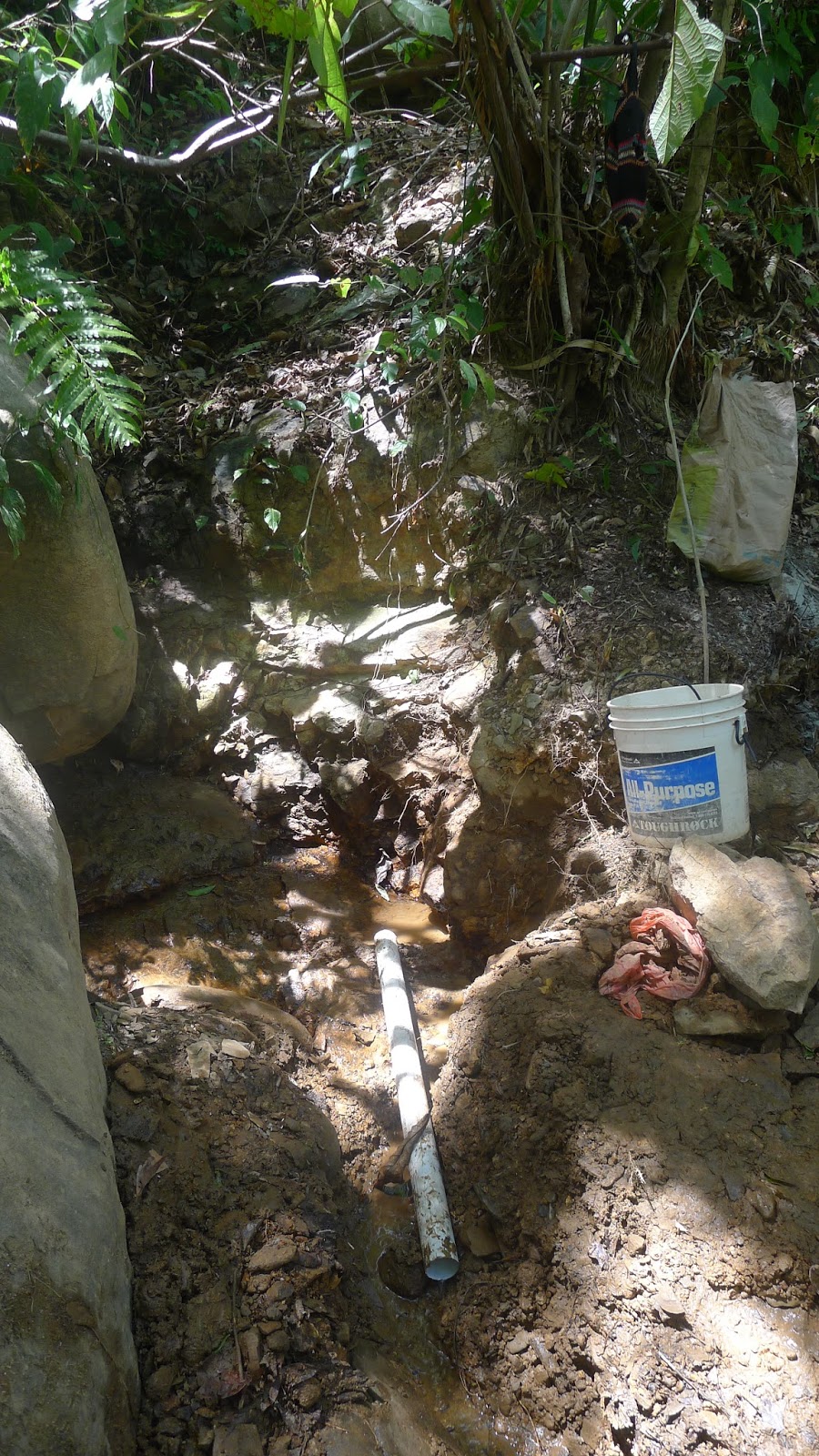
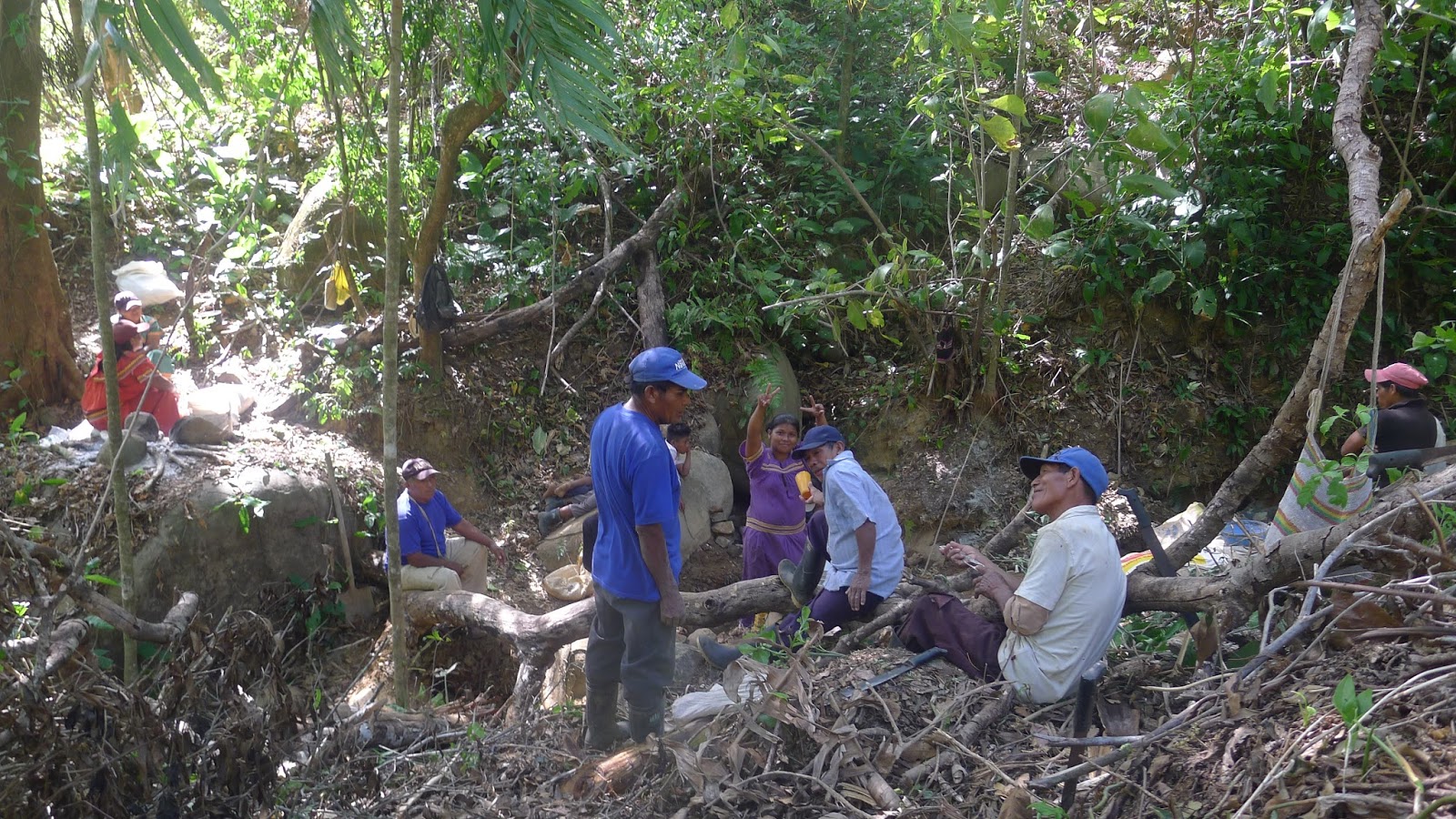
However, most days are without visitors. I fill my days with tasks, to the point that my booklist is growing instead of shrinking. My desire to plant a garden and trees has become overwhelming and the arrival of rain is anticipated on many levels. In the morning, I make an aeropress coffee, water the plants, stretch, meditate, feed my cat Inch, and eat breakfast with the host families dog, Chaco. I then fulfill the tasks for the day. Usually they are project related and range from informing community members about workshops or meetings, giving the workshops and participating in the meetings, to technical studies and construction. We have finished surveying the water system, and are finishing up with the construction of the spring boxes. All the materials have been bought by the community, raised by selling tortillas and tamales. The work has been rewarding, but by no means easy. I act as the engineer for the system and direct anywhere from 5 to 15 people each work day in a mutually second language about work that I am by no means an expert in. We get by, and most work days are packed with laughter, and they enjoy making fun of me and my novice ngabere understanding. The responsibility, of successfully distributing water to nearly 200 people,  is heavy, and it is a poignant taste of the responsibility that engineering work can have.


Work days are usually about 8 hours. We eat and drink consistently throughout the day. There is a large boulder by the spring source, which serves as the kitchen. Each worker is required to bring a contribution of food that is shared with the group.


I have began to understand that my presence in the community will give quality to the project, but most importantly gives confidence. While the work is technical, it is not particularly precise. For example, Ricardo, the water committee president, approached me one day asking for a list of materials for a tank to take the the local government, in an attempt to acquire additional funding. I spent the day reading about tanks, and calculated all the necessary materials and size of the tank, given the flow rate at the spring and the projected population of the community. The following day, at a community meeting, Ricardo pulled out a tape measure and presented different size tanks to the community. They voted on what seemed most appropriate. They asked my opinion and I gave technical details about each possibility, but it really came down to what felt right. The truth is, correctly sizing a tank will save money, but a large tank has no detrimental effects. My engineering approach can give a ballpark range for the size, but more importantly it gives a green light to actually build the tank, whatever size they choose, instead of simply talk about it.


I also have spent time giving workshops on diarrhea, sanitation, water storage and treatment and HIV and AIDS.


With the lack of rain, the spring where I get water has moved, and I now have to carry water about 10 minutes, up and down hills, to my house. Relative to other water-less communities, this is trivial, but it is a profound reminder of the gravity of water, and the privilege of having water in the fosset.


I wake up before sunrise, and fall asleep when I am tired. From an outside perspective, the adventure and liberty of this life is enticing and rich. However, there are days, when I return home after working, my legs are tired, and my gallon of water is empty, or the ants have invaded my rice, or Inchu’s bag of cat food is empty and she nibbling my toes, where I miss the comfort, familiarity, and ease of home. Additionally, I am conscious of the quality of my food, the hungry eyes that watch me while I eat, and the fact that I am a rich visitor in a poor community. I try to uphold their own traditions, understanding a potential blindness to cultural differences, but it can be exhausting and weighs heavy on the heart.


Otherwise, life is light and relatively easy. The Comarca is beautiful, I feel well appreciated and useful within the community and I enjoy the peace, quiet and simplicity of each day.